
Buying a stock is exciting. Selling it is often much harder.
Many beginner investors spend hours researching which stock to buy, but very little time deciding when to sell. As a result, emotions often take over.
I still remember the first time I bought a tech stock and watched it fall sharply. Instead of following a plan, I kept hoping it would bounce back, only to sell later out of panic. That experience taught me that having no exit plan can be more dangerous than choosing the wrong entry point.
The reality is that successful investing is not only about finding good companies. It is also about having a clear exit plan. Knowing your stop loss and take profit strategy before entering a trade can help you stay disciplined when markets become volatile.
Why Every Investor Needs a Stop Loss Strategy
A stop loss is a predefined point where you decide to exit a losing position. It helps limit losses when the market moves against your expectations.
If you want a more detailed definition, Investopedia explains how a stop-loss order works in practice.
Without a stop loss, a manageable decline can turn into a much larger problem.
The Math of Losses
| Loss | Gain Needed to Recover |
|---|---|
| 10% loss | 11% gain |
| 30% loss | 43% gain |
| 50% loss | 100% gain |
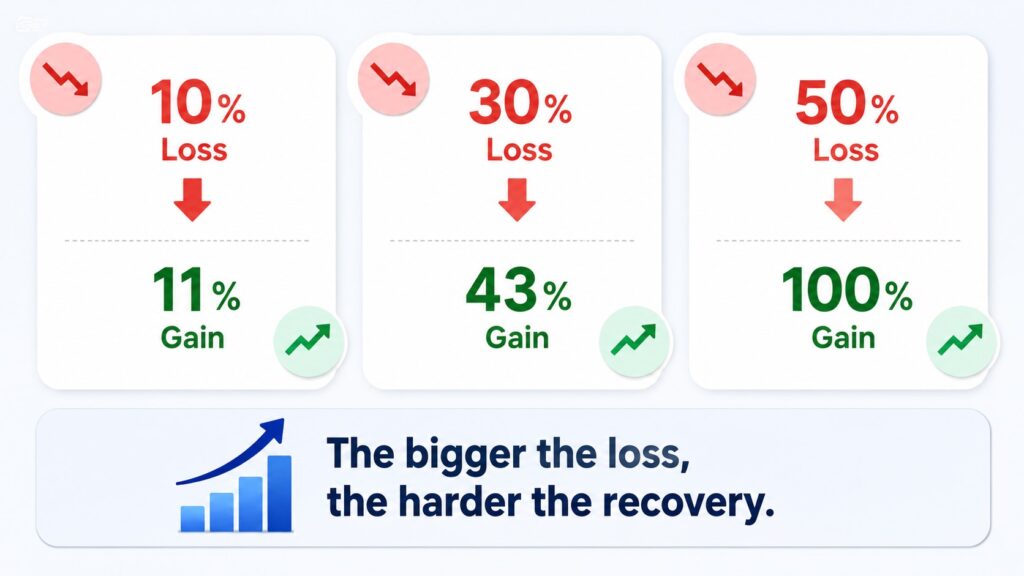
This simple math shows why limiting losses is so important.
For example, a 50% loss requires a 100% gain just to return to the original price, which is why protecting capital matters so much.
The deeper the loss, the harder it becomes to recover. That is the real reason stop losses matter. They are not about being perfectly right. They are about preventing one mistake from damaging your portfolio too much.
Three Common Stop Loss Methods
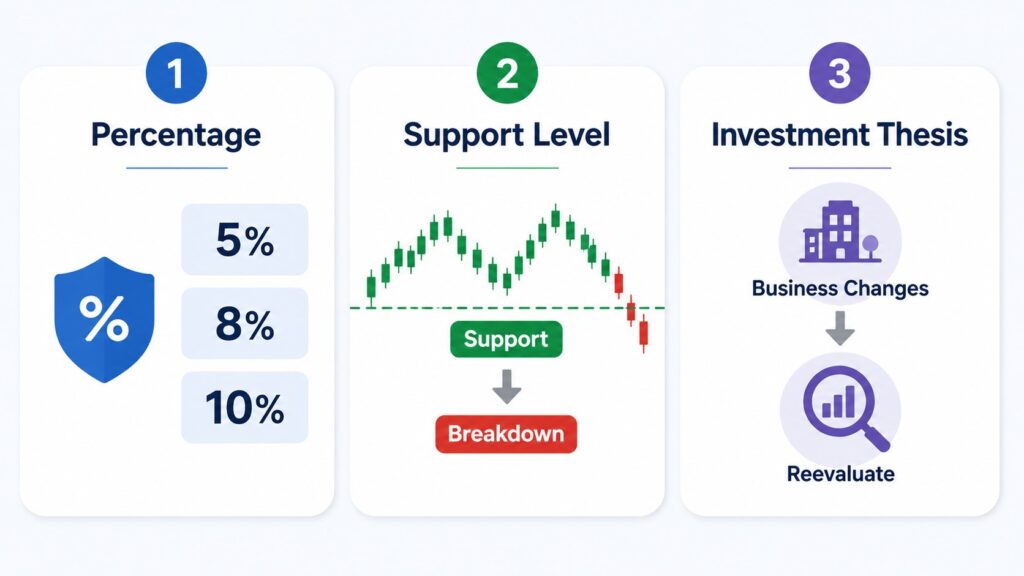
1. Percentage-Based Stop Loss
This is the easiest approach for beginners.
Before buying a stock, decide how much you are willing to lose.
For example:
- 5% below your purchase price
- 8% below your purchase price
- 10% below your purchase price
The exact percentage depends on your investment style and the volatility of the stock. Long-term investors often allow more room than short-term traders.
The important part is deciding before emotions become involved.
2. Technical Support Levels
Many investors use chart analysis instead of fixed percentages.
If a stock closes below an important support level with increased trading volume, it may indicate that the original market structure has changed.
Rather than reacting to every intraday price swing, it is usually better to check the closing price, volume, and broader market conditions together.
If you are not familiar with chart basics yet, you may want to start with my beginner guide to reading candlestick charts.
For example, I no longer set a stop loss only by looking at a random percentage. I first check whether the price is near a major support level, whether volume is increasing, and whether the overall market is weak. This helped me avoid selling simply because of one bad day.
3. When Your Investment Thesis Changes
Not every stop loss should depend on price alone.
Sometimes the business itself changes.
Examples include:
- Earnings deteriorate significantly.
- The company’s competitive advantage weakens.
- Industry conditions become less favorable.
- Management makes unexpected strategic decisions.
If the original reason for buying no longer exists, it may be time to reevaluate the investment regardless of whether the position is profitable or not.
Why Taking Profits Is Often Even Harder
Most investors assume making money is the easy part.
In reality, deciding when to lock in gains can be surprisingly difficult.
Fear of missing out often causes investors to hold winning positions too long. On the other hand, fear of losing profits may lead them to sell far too early.
I have also made the opposite mistake: selling a winning stock too quickly just because I was afraid of losing the profit. Over time, I learned that taking profits gradually can be less stressful than trying to sell at the perfect top.
This is why having a take profit strategy before entering a trade is just as important as having a stop loss. In other words, a clear stop loss and take profit plan can make selling decisions less emotional.
Three Practical Take Profit Strategies
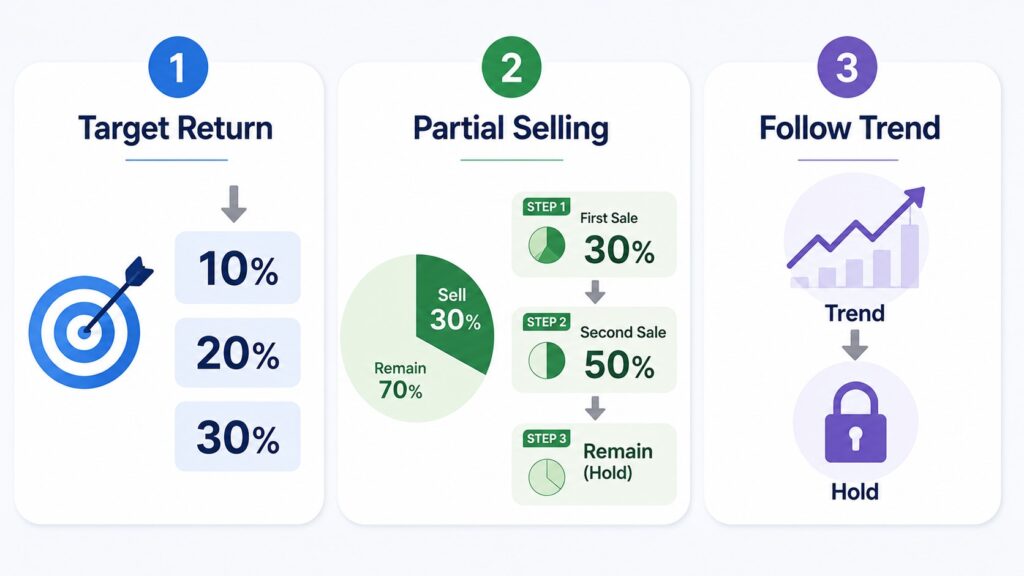
Set a Target Return
One common method is establishing a profit target before buying.
For example:
- 10% gain
- 20% gain
- 30% gain
Reaching your target removes much of the emotional decision-making from the process.
Use Partial Profit Taking
Instead of selling your entire position at once, consider selling gradually.
For example:
- Sell 30% after a 15% gain.
- Sell another portion after a larger move.
- Let the remaining shares continue if the trend remains healthy.
This approach allows you to secure some profits while still participating if the stock continues to rise.
Follow the Trend
Some investors avoid fixed price targets altogether.
Instead, they continue holding as long as the overall trend remains intact.
When reviewing charts, I usually start with the weekly or daily timeframe before looking at shorter-term movements. This helps me avoid reacting to one dramatic trading session.
I also pay attention to moving averages, trading volume, and major support levels rather than relying on a single technical indicator.
If you want to understand trend-following more clearly, my moving average guide explains how investors use moving averages to identify market direction.
A Common Beginner Mistake
One mistake beginners often make is focusing almost entirely on buying the “right” stock while giving very little thought to how they will eventually sell it.
Without an exit plan, every market move feels emotional.
Before opening any position, I like to answer three simple questions:
- Where will I admit I am wrong?
- Where will I consider taking profits?
- What event would completely change my investment thesis?
Having these answers in advance makes decision-making much easier when volatility increases.
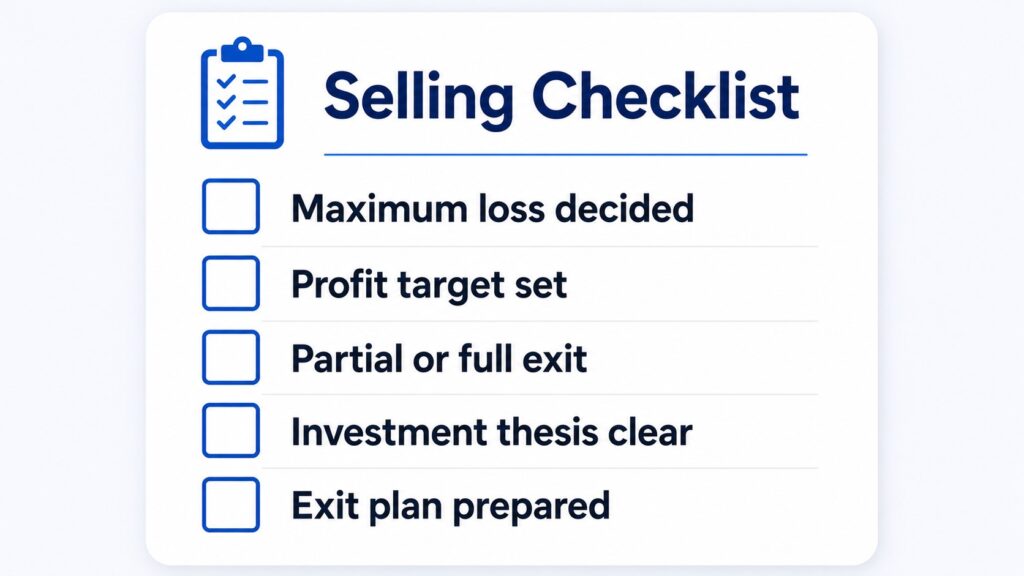
A Simple Selling Checklist
Before buying any stock, ask yourself:
- What is my maximum acceptable loss?
- What is my initial profit target?
- Will I take profits gradually or all at once?
- Why am I buying this company?
- What would make me change my opinion?
If you cannot answer these questions, you may not be fully prepared to manage the position after purchasing it.
Practical Investor Takeaway
There is no universal stop loss and take profit percentage that works for every investor.
The most effective strategy is one that matches your investment horizon, risk tolerance, and overall plan.
Consistency matters far more than trying to predict every market movement.
Risk management is not about avoiding losses entirely. It is about making sure no single mistake has an outsized impact on your long-term investment journey.
In that sense, stop loss and take profit rules are part of a broader risk management process.
Final Thoughts
Markets are unpredictable, and no strategy guarantees success.
A stop loss and take profit plan should not be viewed as a prediction tool. Instead, think of it as a framework that helps remove emotion from your investing decisions.
Whether you invest in individual stocks, ETFs, or broad market index funds, having clear selling rules can help you stay disciplined through both rising and falling markets.
New investors can also review investor education resources from the U.S. Securities and Exchange Commission before making financial decisions.
❓ FAQ
Q1. What is a good stop loss percentage for beginners?
There is no universal percentage that works for everyone. Many beginner investors use a stop loss between 5% and 10%, but the right level depends on your investment strategy, the stock’s volatility, and your risk tolerance. The important part is setting your exit point before emotions take over.
Q2. Is it better to use a stop loss based on price or technical analysis?
Both approaches can work. A fixed percentage is simple and beginner-friendly, while technical levels such as support and resistance may better reflect how a stock is actually trading. Many experienced investors combine both methods rather than relying on just one.
Q3. Should I always take profits at a fixed percentage?
Not necessarily. Some investors prefer a fixed profit target, while others use partial profit taking or follow the trend for as long as it remains intact. The key is to choose a strategy that matches your investment goals and apply it consistently.
Q4. Can long-term investors use stop losses?
Long-term investors may not use strict price-based stop losses, but they should still have clear exit criteria. If the original investment thesis changes—for example, because of weakening fundamentals or a major shift in the business—it may be time to reassess the position.
Q5. What is the biggest mistake beginners make when selling stocks?
One of the most common mistakes is making decisions based on emotions instead of a plan. Many investors hold losing positions for too long out of hope or sell winning stocks too early out of fear. Having predefined stop loss and take profit rules can help reduce emotional decision-making.
📚 Related Articles
Support and Resistance in Stock Charts: A Beginner’s Guide to Better Buy and Sell Timing
Trading Volume for Beginners: How to Read It With Price Action
Moving Averages in Stocks: The Ultimate Guide to Clear Trend Reading
MACD Indicator Explained: A Smart Beginner’s Guide to Better Chart Reading

Stock Valuation Checklist: 7 Critical Checks Before Calling a Stock Cheap
A stock can look cheap because its price has fallen 40%, its P/E ratio is…
RSI Divergence vs MACD Crossover: Which Is More Reliable for Trading?
RSI divergence can warn that price momentum is weakening before a reversal becomes obvious. A…
Before You Buy the Dip: 5 Critical Balance Sheet Checks Every Investor Should Make
A stock that falls 20%, 30%, or even 50% can suddenly look cheap. But a…
Disclaimer: This article is for educational purposes only. It is not financial advice or a recommendation to buy or sell any specific stock, ETF, cryptocurrency, or other asset. All investment decisions are your own responsibility.
Pingback: Support and Resistance in Stock Charts: A Beginner's Guide to Better Buy and Sell Timing